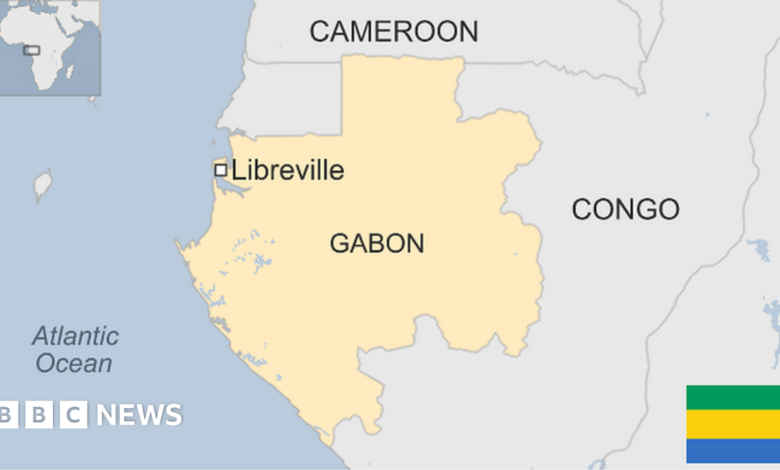
Gabon country profile – BBC News
Some key dates in Gabon’s history:
14th Century – Bantu migrants settle in the area.
15th Century – Portuguese explorers and traders arrive in the area.
16th Century – European slave traders arrive and the coast becomes a centre of the transatlantic slave trade.
1839-1841 – France signs treaties with Gabonese coastal chiefs. Local Mpongwe ruler signs away sovereignty to the French, who establish a protectorate over the area.
1862-1887 – France expands its control to include the interior of the country.
1910 – Gabon becomes one of four territories making up French Equatorial Africa.
1958 – Gabon votes to become autonomous republic in the French Community.
1960 – Gabon declares independence with Leon M’Ba as president.
1967 – Omar Bongo becomes president after M’Ba dies. He dominates Gabonese politics for over 40 years, serving seven consecutive terms.
1968 – Bongo declares Gabon a one-party state.
1990s – Multi-party political system introduced.
2003 – Constitution amended to repeal term limits, ensuring President Bongo holds the presidency for life.
2009 – Death of Omar Bongo, succeeded by his son Ali.
2019 – Failed coup attempt. During a trip by President Ali Bongo to Morocco for medical treatment, armed rebels in Libreville temporarily declare a “National Restoration Council” to “restore democracy”. Government forces quickly reassert control.
2022 – Gabon and Togo join the Commonwealth.
2023 – President Ali Bongo is deposed by a group of soldiers just after being declared the winner in the August presidential elections, a poll that the opposition argued was fraudulent.
Source link